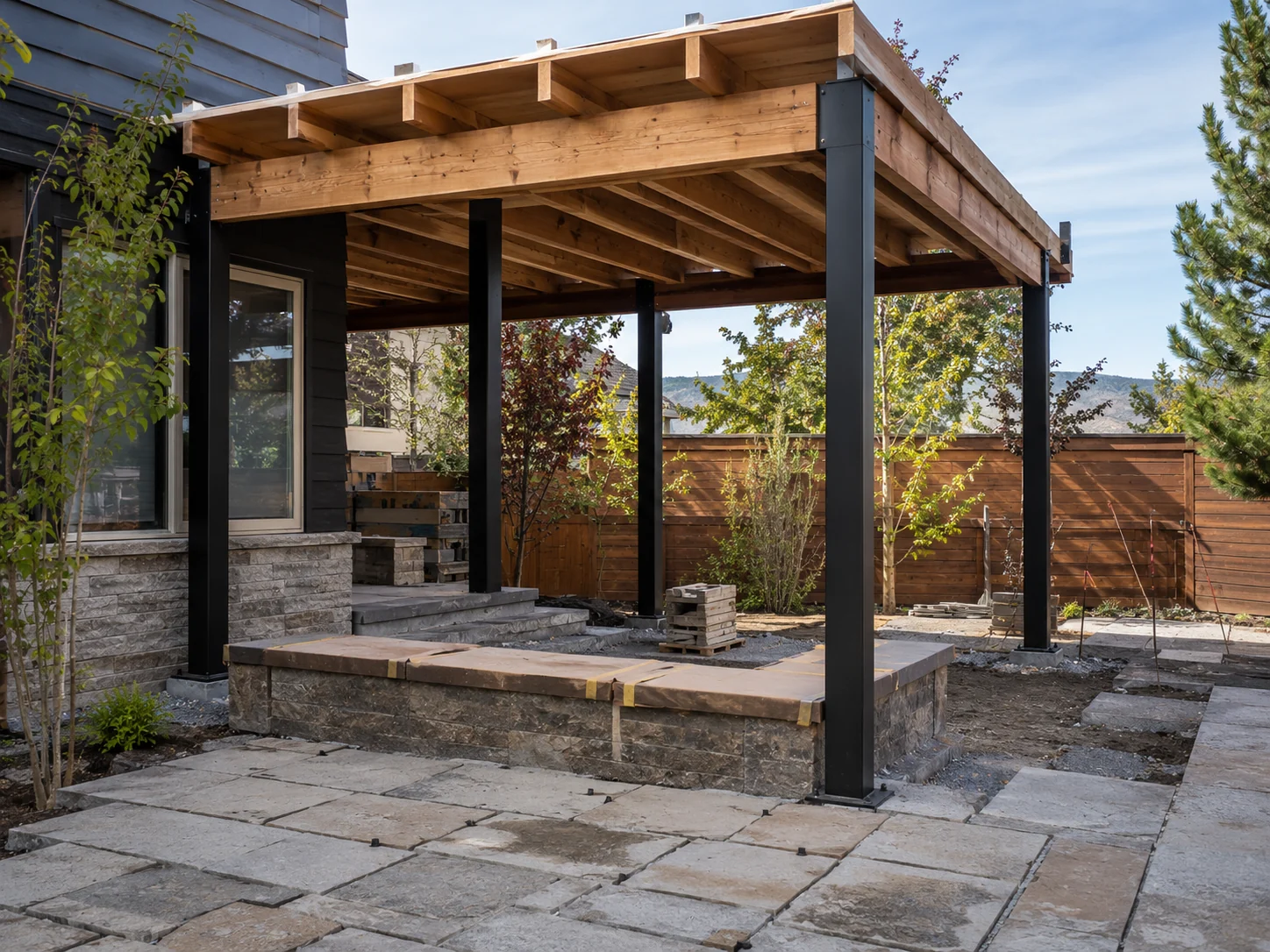
Define shade versus weather protection
An open pergola filters sun but does not function like a solid roof. Clarify the comfort goal before choosing the structure.
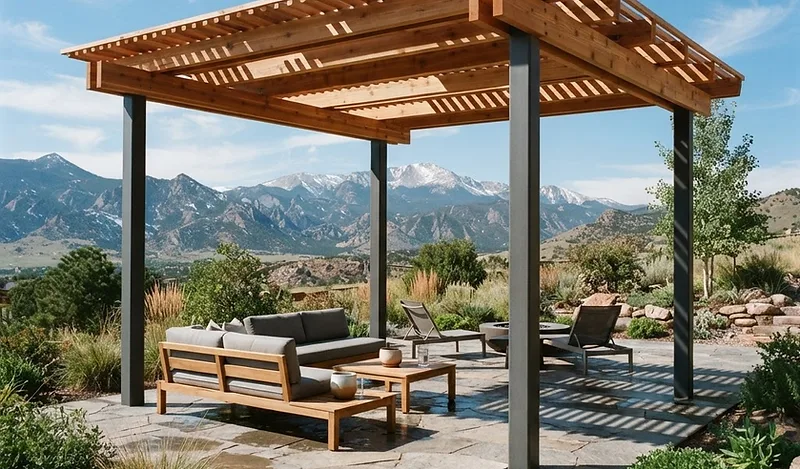
Fulcrest designs and builds custom cedar and aluminum pergolas in Loveland, Greeley, Berthoud, Severance, and surrounding Northern Colorado communities, including attached and freestanding pergola construction.
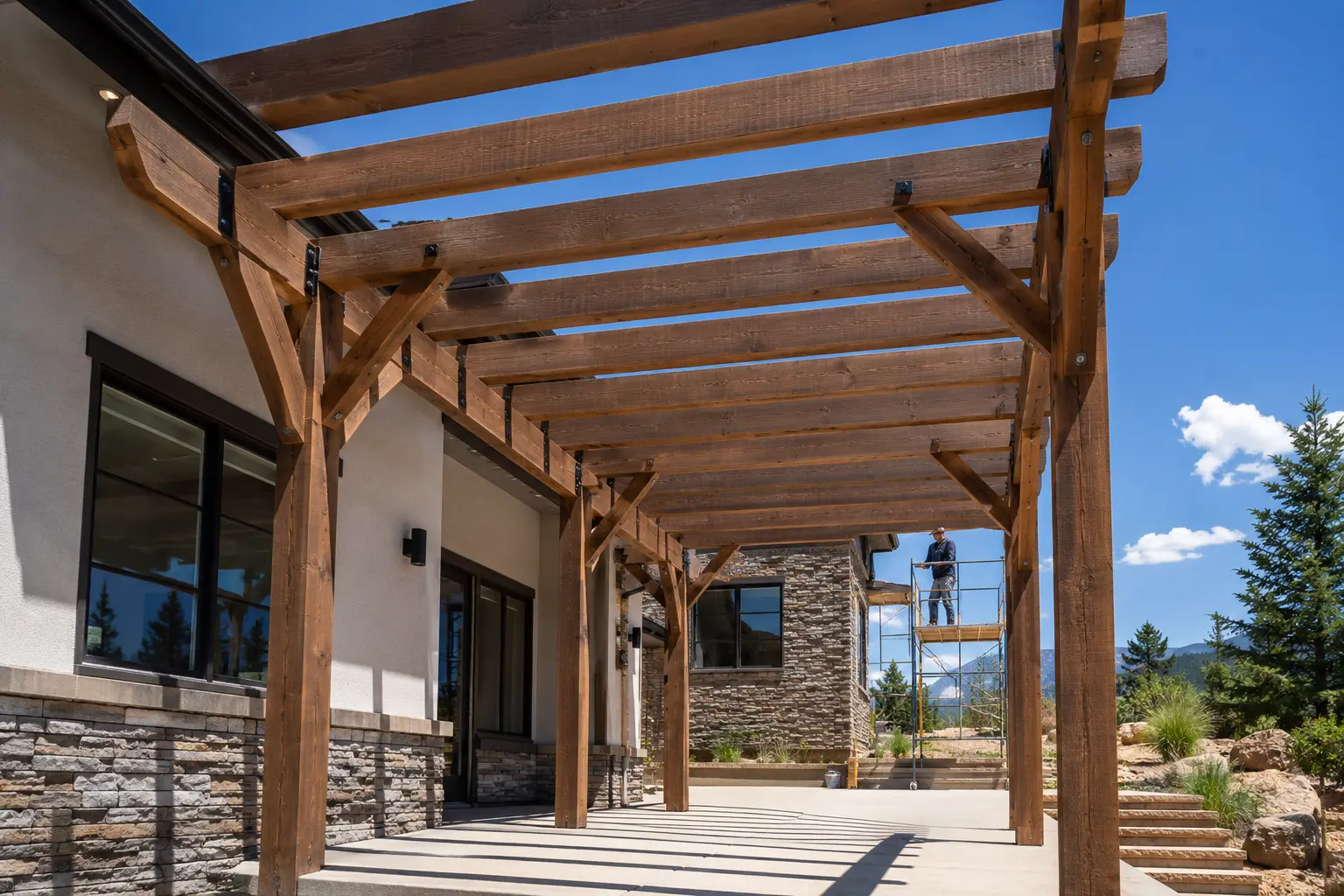
Attached pergolas tie into the house and create living space directly off the back door, but the connection has to handle both structure and the building envelope correctly. Freestanding pergolas stand on their own footings, allow more freedom in placement and avoid penetrating the house. Neither is better in the abstract; the right approach depends on the site, roofline and property constraints.
An open pergola gives partial shade and air movement. A patio cover gives real weather protection and carries different snow, wind, roof and drainage loads. They're different structures rather than the same structure with a roof added later.
Cedar is warm, takes stain and finish well, and can be built to a wide range of proportions. It asks for periodic maintenance, and material, finish and fastener selection matter under Northern Colorado sun and weather exposure.
Aluminum is low maintenance, dimensionally stable through temperature swings and avoids wood decay at connections or grade. It comes in defined profiles, so it offers less freedom in proportion than cedar. We build both cedar and aluminum open pergolas. We don't offer operable or louvered roof systems.
Permit requirements vary by jurisdiction and by what you're building. Attachment, size, location and other project conditions can change the approval path. We identify that path during planning and bring in a structural engineer where the spans or conditions call for one.
We build pergolas throughout Northern Colorado, including Greeley, Fort Collins, Loveland, Windsor, Timnath, Berthoud, Johnstown and Severance.
Pergola performance depends on orientation, slat geometry, height, wind exposure, and whether the goal is filtered shade, rain protection, or a structure for lighting and privacy.
An open pergola filters sun but does not function like a solid roof. Clarify the comfort goal before choosing the structure.
Morning and late-afternoon sun enter differently from overhead summer sun. Orientation should protect comfort without blocking valued sightlines.
Freestanding and attached structures have different footing, flashing, engineering, and permit considerations.
A pergola filters sunlight. A patio cover provides solid overhead protection. The right choice starts with the comfort and weather protection you want.
Read guide →A practical overview of the structural choices that change an overhead outdoor project, from an open pergola to a solid patio cover.
Read guide →An HOA review and a municipal permit are separate processes. Knowing which rules apply to the property can prevent avoidable redesign later.
Read guide →Explore our service areas for local project guidance, municipality considerations, and location-specific information for communities we serve.