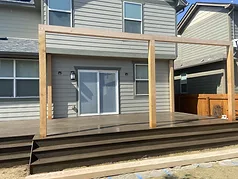
How a pergola makes shade
A pergola makes shade by breaking up direct sunlight with the rafters and slats across its top, so you get filtered shade rather than the full cover of a solid roof. How much useful shade it creates, and at what time of day, depends on decisions made before it is built. Two pergolas of identical overall size can cast different shade patterns because orientation, member spacing, height, and surrounding conditions differ.
Orientation relative to the sun's path
The sun's path changes through the seasons: higher in summer, lower in winter. A pergola built for afternoon relief is solving a different problem than one built for midday shade, so the compass direction matters less than the specific hours you're trying to cover.
Rafter spacing and direction
Closer spacing generally filters more direct sun than wider spacing, while rafter direction changes where the resulting shadow falls as the sun moves. The actual pattern also depends on member depth, overall height, orientation, and season, so there is no single spacing number that guarantees a particular shade result on every property.
Attached vs. freestanding changes the options
An attached pergola has to coordinate with the home's existing structure and orientation. A freestanding pergola can offer more flexibility in placement and orientation, but it still has its own footing, stability, setback, and site constraints. The better configuration depends on the actual property and project goals.
What an open structure won't do
A conventional open pergola filters direct sun rather than providing the complete weather protection of a solid roof. If the space needs reliable rain protection or continuous full shade from a roof, that points toward the separate patio-cover conversation rather than asking an open pergola to perform a different job.
Future shade additions need their own scope check
Homeowners sometimes consider fabric shade elements or climbing plantings around an open pergola. Those additions can change loads, attachment needs, maintenance, and how the structure behaves in wind, so they should not be treated as automatic add-ons. Fulcrest's current pergola scope does not include operable or louvered roof systems.
Working this out for a specific property
Orientation, spacing, seasonal sun angle, existing trees, the house, neighboring structures, and the hours the space will be used all affect the result. The useful design comes from applying those principles to the property instead of relying on a generic shade formula.