Bigger and Heavier Gates Need Stronger Everything
A wide or heavy gate puts a lot more strain on its posts and hinges than a small one does. The bigger the gate, the sturdier the frame and the posts holding it need to be.
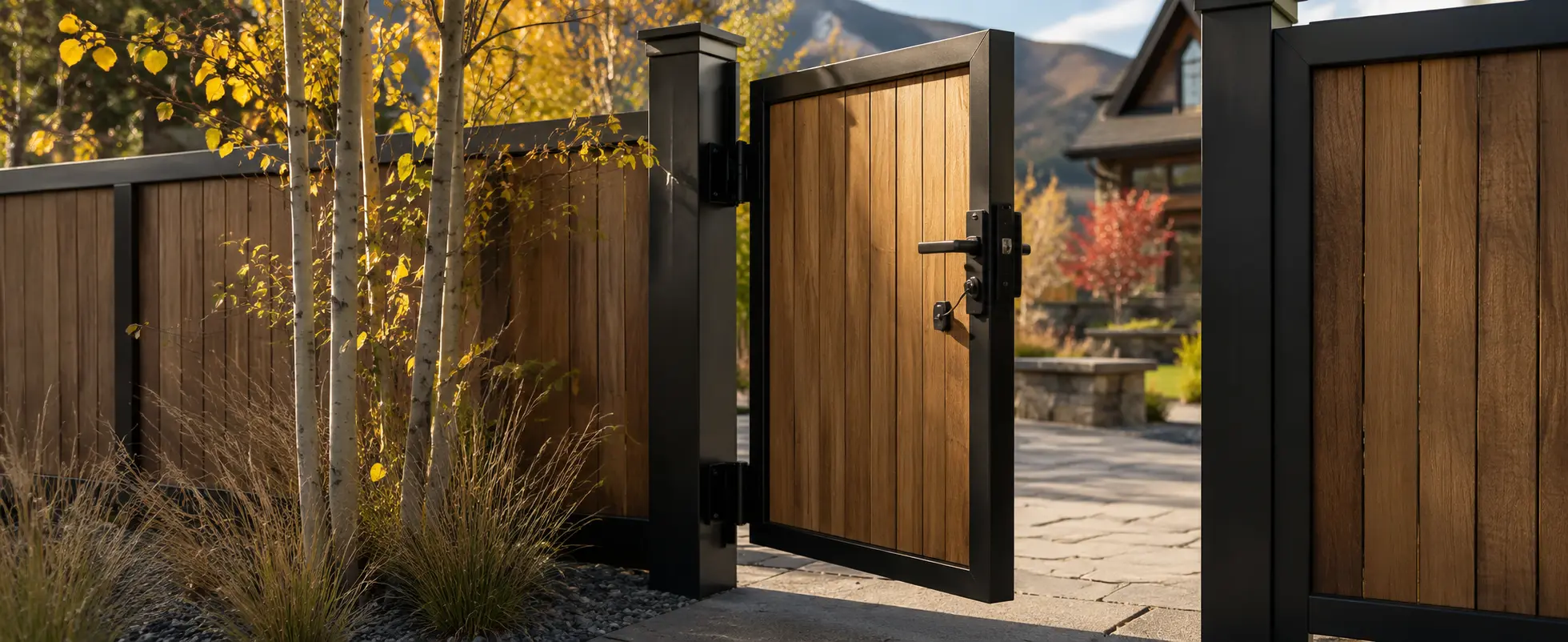
Fulcrest designs and installs custom pedestrian, driveway, and fence gates in Timnath, Greeley, Berthoud, Severance, and surrounding Northern Colorado communities, including manual and automated gate systems.
Loading projects…
A gate is basically a lever hanging off two points, the hinges and the post they're mounted to. The wider or heavier the gate, the more that lever fights against everything holding it up. Weak posts, hinges sized for a lighter gate, or a frame that flexes will all show up eventually as a corner that drops and a latch that stops lining up. We size the posts, hinges, and frame for the actual gate, not a generic one.
Wide enough for a mower is different from wide enough for a truck or trailer, and going wider isn't free. It changes the hardware, the posts, and whether you need one panel or two. We measure against what's actually going through the opening, not just what looks proportional to the fence, so you're not stuck making two trips or scraping a fender every time.
An automated gate is a lot more than a motor bolted onto an existing gate. The gate has to move properly by hand first, and the operator has to match the gate's size, weight, and geometry. Power, controls, safety devices, stops, and manual release also need somewhere to go. Planning for all of that before the gate and posts go in is a lot cheaper than retrofitting it later.
Opening width, weight, post stiffness, hinge geometry, ground clearance, wind, latching, power, and safety devices all affect whether a gate stays dependable.
A wide or heavy gate puts a lot more strain on its posts and hinges than a small one does. The bigger the gate, the sturdier the frame and the posts holding it need to be.
Snow, frost, and drainage all move the ground a little through the year, and that can change how much clearance a gate needs and how smoothly it swings. We plan for that instead of setting it up to work in just one season.
If you want the gate to open itself, the motor is only one piece of it. Power, safety sensors, controls, and a manual override all have to work together, and it's a lot easier to plan for that now than to add it later.
A good gate disappears into the background. You open it, you close it, and you don't think about it again until next time. A bad one becomes something you drag, lift, or slam, especially once a wide opening needs to fit a mower, trailer, or vehicle through it. We start with what actually needs to pass through and how often, then build the opening, hardware, and post support to handle that without becoming a daily fight.
Explore our service areas for local project guidance, municipality considerations, and location-specific information for communities we serve.