Repair can make sense
A limited number of damaged boards, rails, hardware items, or posts may be addressed when adjacent construction remains sound.
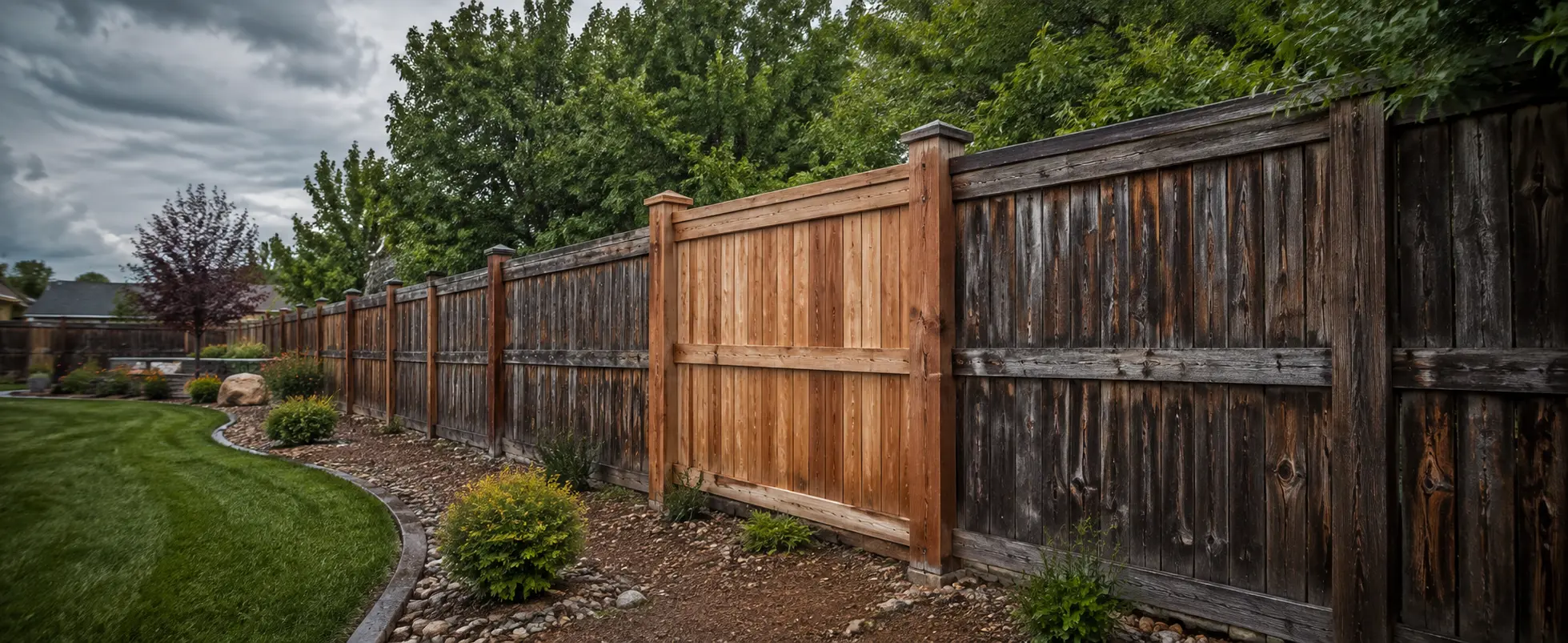
Fulcrest provides residential fence repair in Windsor, Timnath, Greeley, Berthoud, and surrounding Northern Colorado communities, including post replacement, panel and rail repair, gate repair, and partial fence replacement.
Loading projects…
A leaning fence, loose panel, or gate that suddenly won't close usually has something causing it. Before replacing the obvious damaged piece, we look at the posts, rails, fasteners, gate hardware, and surrounding grade to figure out what actually failed. Sometimes one section can be repaired cleanly. Other times the visible damage is only one part of a fence that's reaching the end of its useful life.
If a fence is leaning, we check the posts before replacing panels. Wood posts are especially vulnerable right at the ground line, where moisture and oxygen create ideal conditions for decay. Concrete around a post isn't automatically the problem, but in dense or poorly-draining soil, it can trap moisture against the wood if it wasn't sloped to shed water when it was poured. Rot isn't the only cause of movement, either: soil conditions, inadequate support, wind loads, or damage nearby can all move a post. The repair should address whichever of those is actually happening, not assume every leaning fence needs the same fix.
A damaged panel, broken rail, or isolated post can often be repaired when the surrounding fence is still sound. We check the neighboring posts and rails before deciding how far the repair needs to go. If they're solid, keeping the good parts of the fence usually makes more sense than replacing an entire run just to make the repair easier.
Repairs stop making sense once the problems aren't isolated anymore. If several posts are loose or decayed, rails are failing in more than one spot, or the material's too far gone to hold new fasteners reliably, replacing a larger section is usually the better use of your money. We'll tell you which situation you're actually looking at before turning a small repair into a bigger project than it needs to be.
A broken picket is different from a line of moving posts. The pattern of failure, material condition, alignment, wind exposure, and remaining service life determine whether repair is good value.
A limited number of damaged boards, rails, hardware items, or posts may be addressed when adjacent construction remains sound.
Widespread post movement, decay across many panels, repeated storm failures, or incompatible past patches may indicate the system is near the end of useful life.
Existing dimensions, species, finish, weathering, post spacing, and panel style affect whether a partial repair will integrate.
Explore our service areas for local project guidance, municipality considerations, and location-specific information for communities we serve.