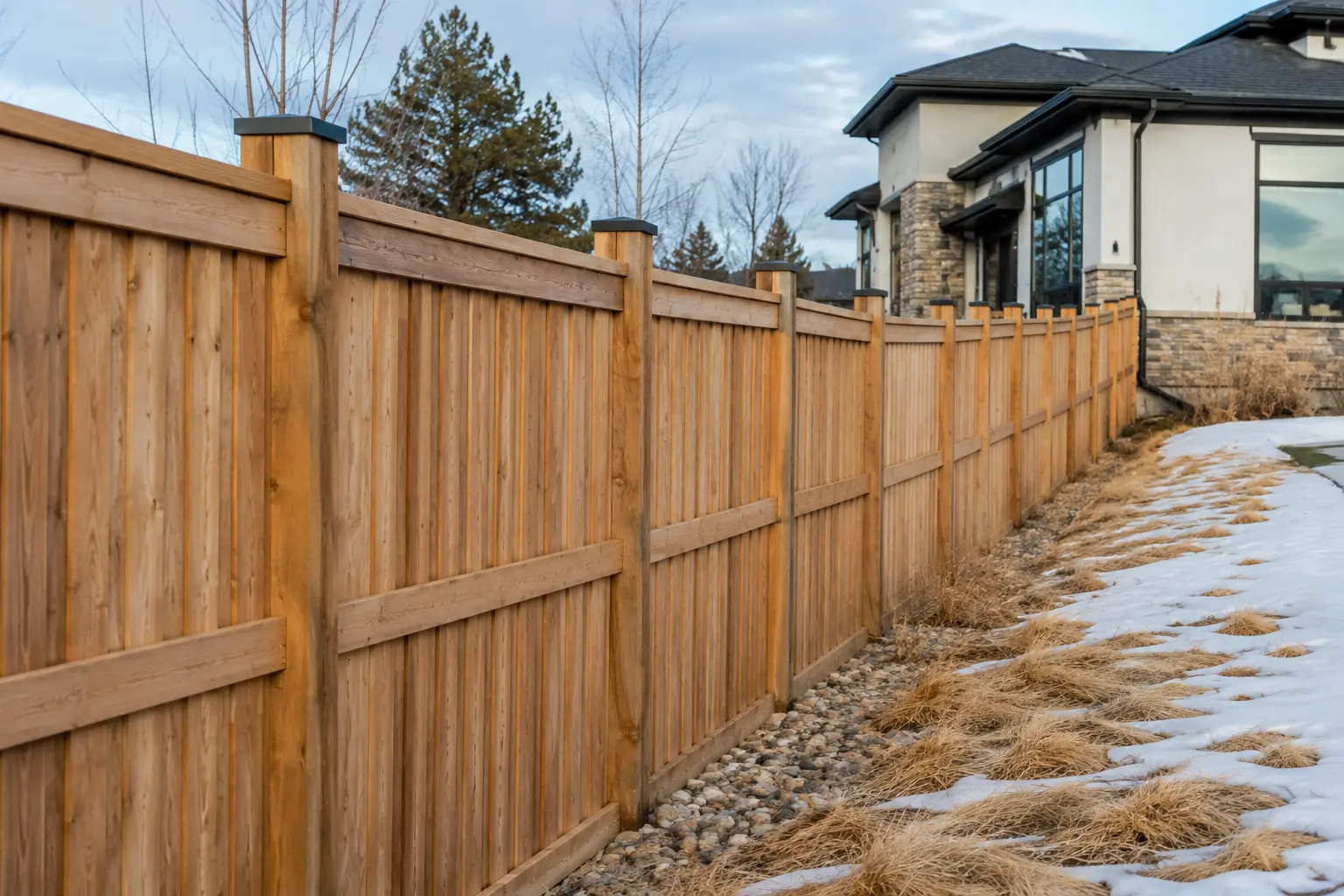
Look at the Whole System First
A broken panel or leaning section is usually the visible symptom of a fence problem, not necessarily the whole problem. The post and support system holding that section in place often determines whether a targeted repair will hold or whether the underlying issue also needs attention.
Leaning or Deteriorated Posts
A post that is leaning, loose, or deteriorated at the base can be the root cause behind a fence failure that first looks like a panel problem. Wood posts deserve particular attention near grade, where moisture conditions can contribute to deterioration over time. A post that moves when pushed, or shows soft or crumbling wood near the base, should be evaluated directly rather than worked around.
What's Happening Below Grade
The support around a post matters as much as the portion visible above ground. A post can look sound above grade while its footing or surrounding soil has shifted. Grade and drainage near a fence line can also contribute to movement where water repeatedly collects near post bases.
Broken Rails, Panels, and Pickets
Damage isolated to a rail, panel, or a few pickets can be a more straightforward repair when the surrounding posts and support system remain sound. Before you repair it, check whether that damage is actually isolated, or whether it's being caused by movement somewhere else in the system.
When a Localized Repair Makes Sense
A section replacement can make sense when surrounding posts, rails, and panels are still sound and the damage is genuinely contained. Replacing a panel without addressing a moving support post can leave the cause unresolved.
Sagging or Misaligned Gates
A gate that drops, drags, or no longer latches cleanly can involve hinges, hardware, gate geometry, or the post supporting it. Hardware adjustment may solve a localized issue, but a shifted hinge post changes the alignment of the whole gate and should be addressed as part of the diagnosis.
Matching New Material to an Older Fence
New cedar can look noticeably different from weathered cedar at first. Color and appearance change as wood is exposed, so a structurally correct section repair may remain visually distinct while the new material begins to weather.
When Repeated Patching Stops Making Sense
If the same section repeatedly needs attention, or several posts along a run show similar deterioration or movement, the problem may be broader than one damaged component. Soil, drainage, installation details, exposure, and material condition can all contribute. At that point, evaluating the affected run as a system is more useful than assuming another isolated patch is automatically the best answer.
What to Check Before Calling Someone
A homeowner can reasonably note whether posts move when pushed, whether damage is isolated or spread across multiple sections, whether gate hardware is visibly worn, and whether there are signs of deterioration or movement at ground level. Footing and concealed support conditions can be harder to assess without closer inspection and may influence the repair-versus-replacement decision.