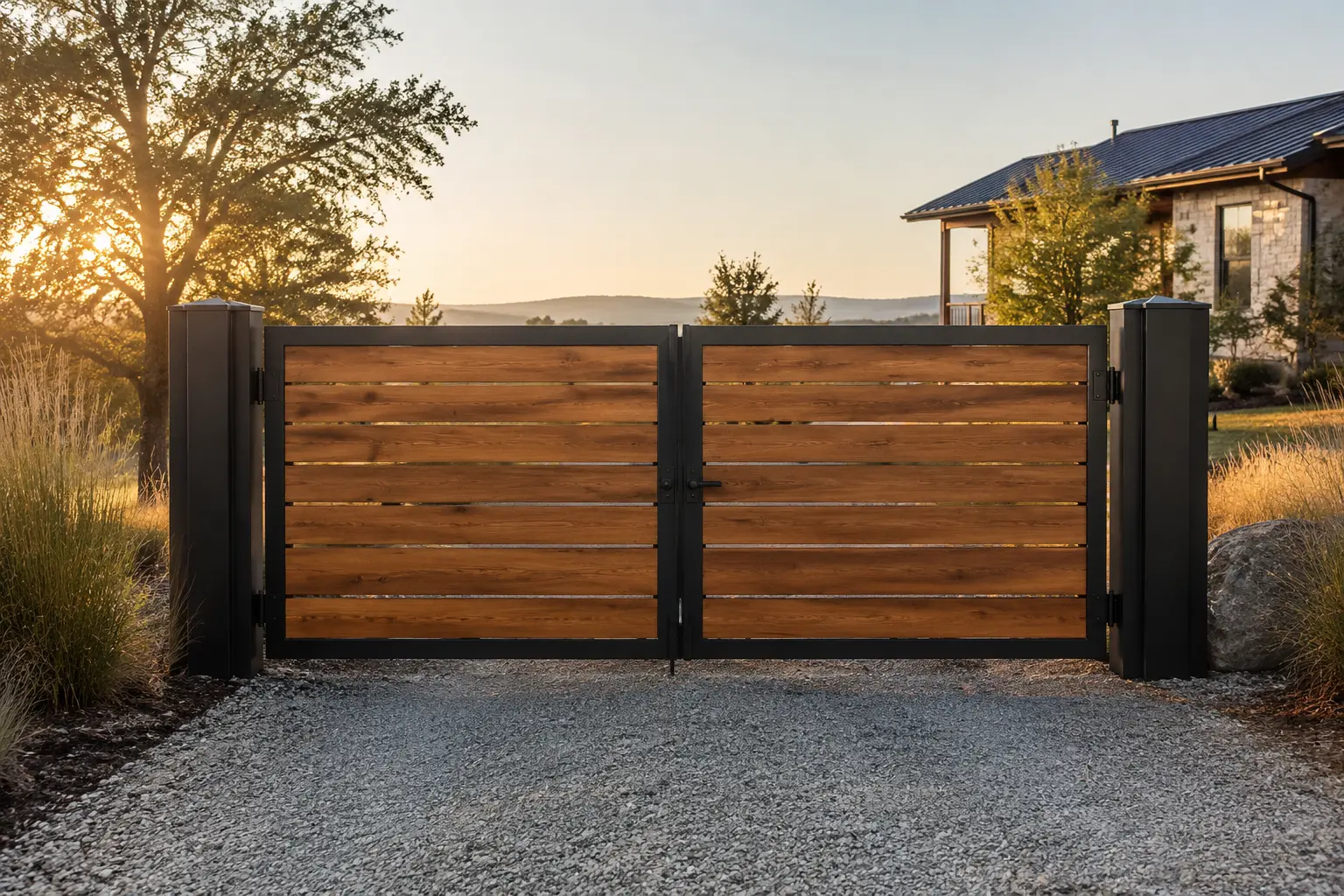
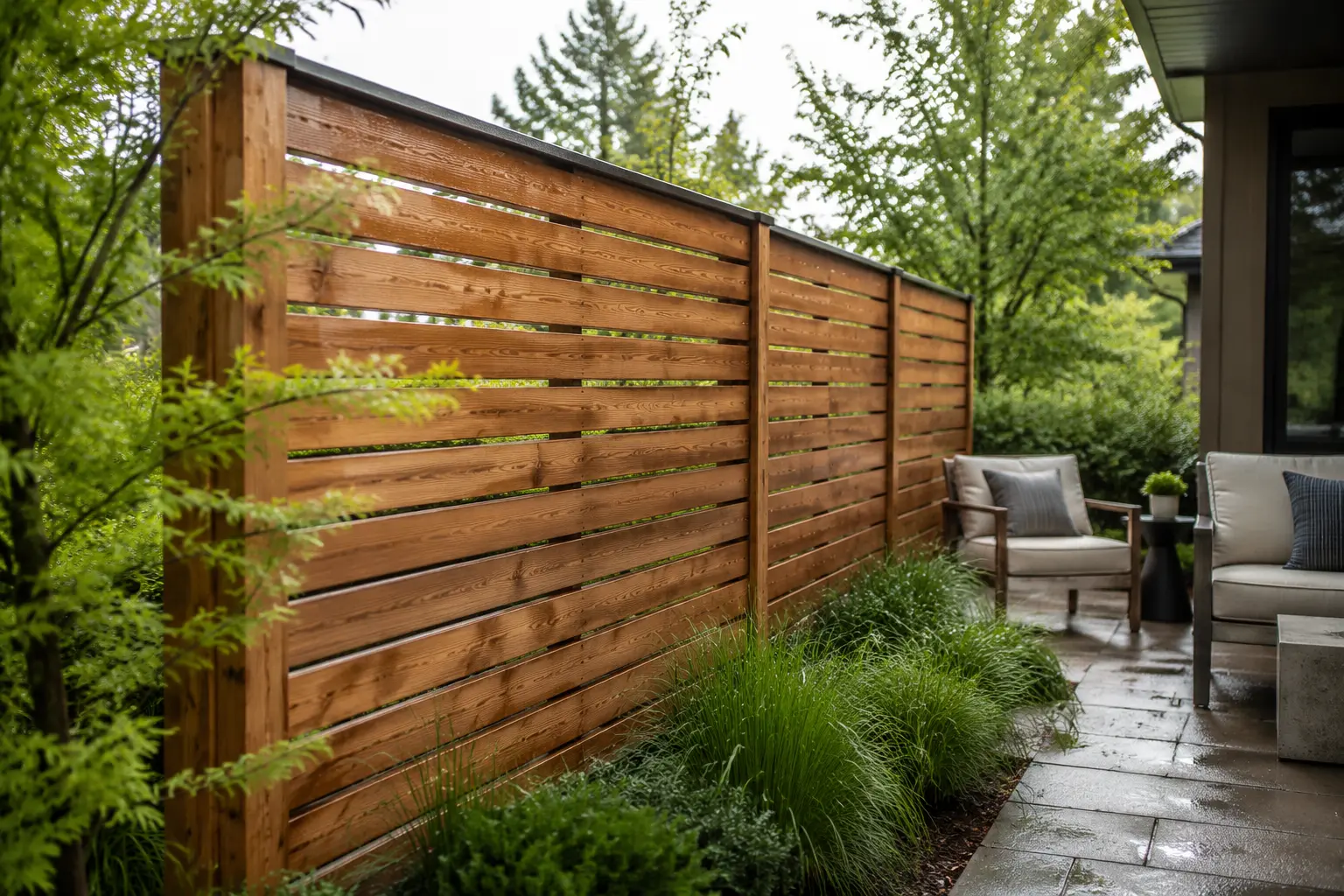
Match opacity to wind exposure
Solid fences provide privacy but catch more wind. Open designs reduce pressure and may preserve views or neighbor relationships.
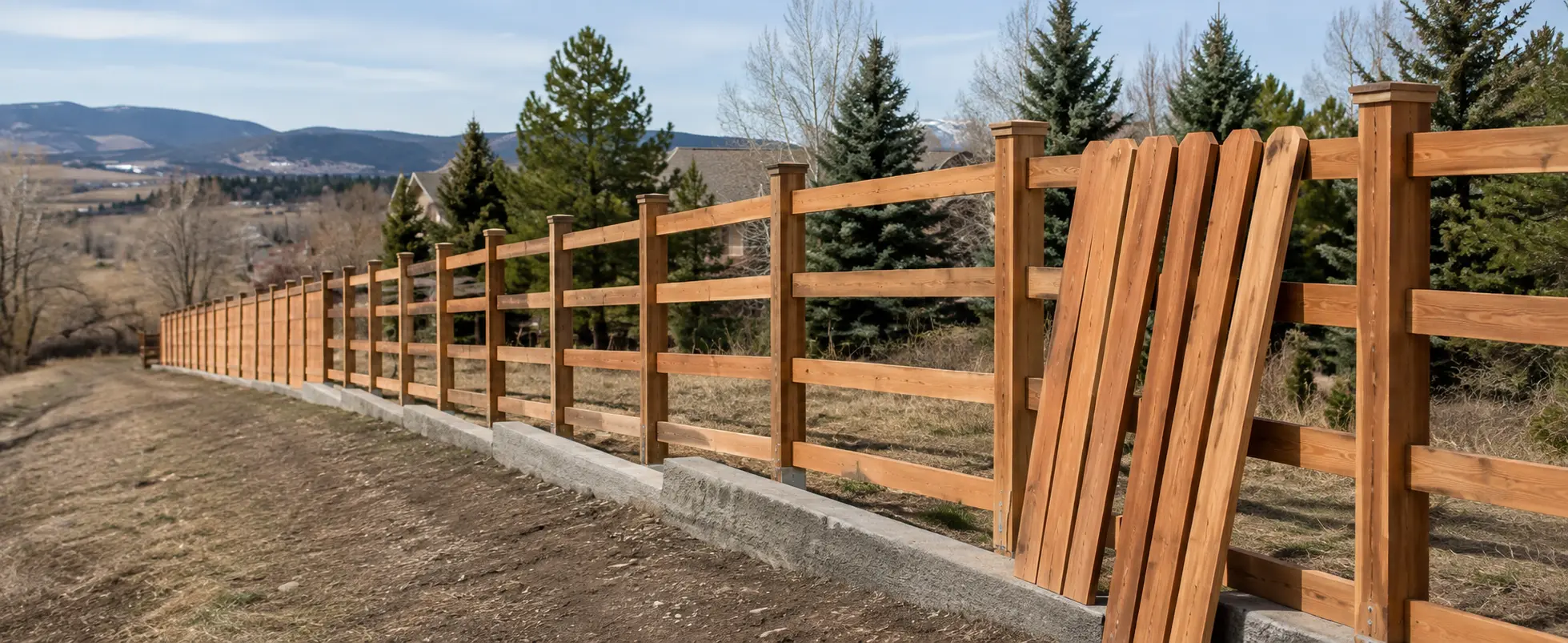
Fulcrest builds and replaces residential fences in Windsor, Timnath, Greeley, Berthoud, Severance, and surrounding Northern Colorado communities, including cedar privacy fencing, steel fencing, and composite fencing.
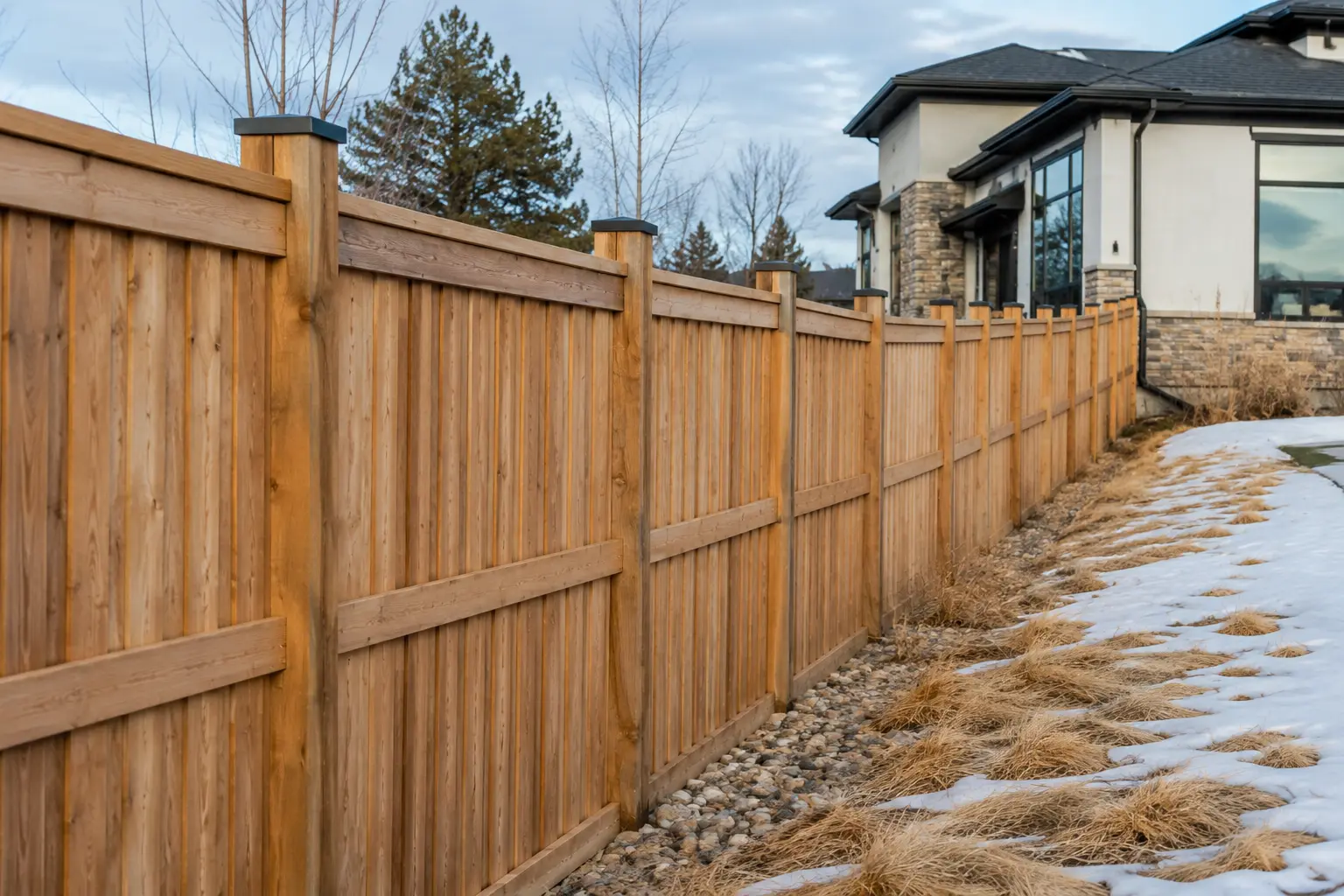
More privacy isn't always better. A solid fence can make sense along a busy street or where neighboring yards sit close together, while another part of the property may feel better with some openness. Gates, views, landscaping, and the way you move through the yard matter too. We look at where privacy is actually needed instead of assuming every side of the yard should get the same fence.
A fence can look great on installation day and still have problems later if the posts aren't right for the fence and the site. Height, wind exposure, soil, drainage, post material, and spacing all change what those posts have to handle. That's why we don't start with one standard hole depth and use it everywhere. The support underneath should match the fence we're actually building and the ground we're putting it in.
Cedar gives you the natural look of wood and can be stained to fit the property, but it also means accepting some weathering and ongoing care. Steel avoids the decay concerns that come with buried wood posts and works well when you want a more open fence. Composite can reduce refinishing, but installation and expansion requirements depend on the product. We compare the appearance, upkeep, exposure, and complete fence system rather than treating one material as the best choice for every yard.
Panel style is only one decision. Post material, spacing, footing conditions, wind permeability, grade changes, gates, and future maintenance determine how the fence behaves.
Solid fences provide privacy but catch more wind. Open designs reduce pressure and may preserve views or neighbor relationships.
Post material, embedment, concrete, drainage, spacing, and soil conditions are central to long-term alignment.
Survey information, easements, utilities, slopes, and transitions influence the final layout and panel stepping.
A good fence changes how you use the yard. It can give you privacy where you actually want it, keep the dog from disappearing around the side of the house, or separate one part of the backyard without making the whole place feel boxed in. We start with what you need the fence to do, then work out the height, layout, material, and style that make sense for your property.
Fence post depth comes down to separate problems, including lateral stability, frost action, and site-specific soil conditions.
Read guide →The panel gets the attention, but the post system does a lot of the work.
Read guide →The damaged piece you can see usually isn't the whole story.
Read guide →Explore our service areas for local project guidance, municipality considerations, and location-specific information for communities we serve.