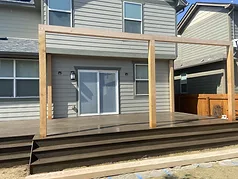
Start with the load path and attachment
Whether a pergola or patio cover is attached to the house or freestanding, begin with how loads travel through the structure into its supports and footings. Movement, gaps, loose connections, shifting post bases or deterioration at a house attachment deserve attention before cosmetic work.
Wood structures
On wood structures, look for softness, decay, splitting and persistent moisture, especially near post bases, horizontal joints and places where water can collect. Surface graying and weathering can be cosmetic; wood that has lost sound material at a structural connection is a different concern.
Steel structures
Steel does not decay like wood, but coatings, corrosion and connections still need attention. Rust at a damaged coating, weld or connection should be evaluated for its extent rather than assuming every visible spot is either harmless or structurally significant.
Solid-roof covers specifically
A solid patio cover also has roof functions to inspect: drainage, flashing at the house, roofing or panel condition, gutters where present, and visible sagging or movement in the supporting structure.
Water staining can indicate a roof or flashing issue, but the source should be traced before repairs are prescribed because water can travel from the point where it first enters.
When repair makes sense vs. when it doesn't
Localized deterioration or a discrete connection, flashing or finish problem may support a focused repair when the surrounding structure is sound and the cause can be addressed.
Widespread deterioration, movement at multiple major connections, significant loss of structural material or broader roof deformation can shift the conversation toward reconstruction. The decision should follow an inspection of the complete affected system rather than a single visible symptom.