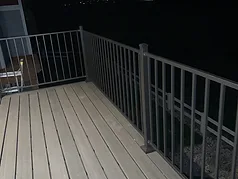
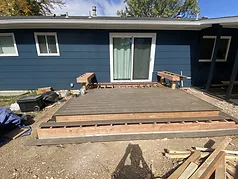
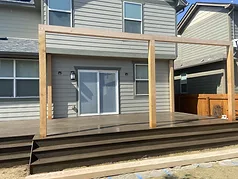
Timing matters more than fixture choice
Lighting planned before a deck, patio, or pergola is finished gives the project more options for concealing routes through or alongside the construction. Lighting added later can be more constrained by finished surfaces and closed framing. That sequencing decision happens well before fixture selection.
Pathway, task, and accent lighting do different jobs
Pathway lighting helps make walks and changes in elevation legible at night. Task lighting supports a working area such as an outdoor kitchen counter. Accent lighting highlights landscape or architectural features for visual effect.
A useful lighting plan can combine these roles without asking one bright fixture to do every job.
New construction vs. retrofitting an existing space
Lighting a new deck, patio, or pergola during construction allows routes, sleeves, blocking, and accessible equipment locations to be coordinated before finishes close. An existing space requires working around what is already built, so concealed routing may be more limited or require selective retrofit work.
Low-voltage and line-voltage serve different needs
Low-voltage systems are common for residential landscape and integrated accent lighting, while some fixtures and equipment use line voltage. The correct approach depends on the selected equipment, layout, controls, and applicable electrical requirements rather than a universal rule for the whole yard.
Fixture placement and structure integration
Fixtures integrated into deck posts or stairs, pergola framing, walls, or hardscape benefit from having their routes and mounting locations planned with the structure itself. That coordination is much harder once the supporting work is already closed and finished.
Wiring sequencing
For new work, sleeves, conduit, blocking, and intended cable routes should be considered before decking, hardscape, or enclosure materials make those paths difficult to reach. Final electrical work is coordinated with the appropriate licensed trade where required.
Planning for what you might add later
Even when a complete lighting package is not part of the current phase, preserving sensible future routes can keep options open. A sleeve beneath a finished surface or an accessible planned route can avoid unnecessarily reopening completed work later.