Gas and wood create different experiences
Convenience, heat, smoke, fuel storage, burn restrictions, cleanup, and installation needs should guide the choice.
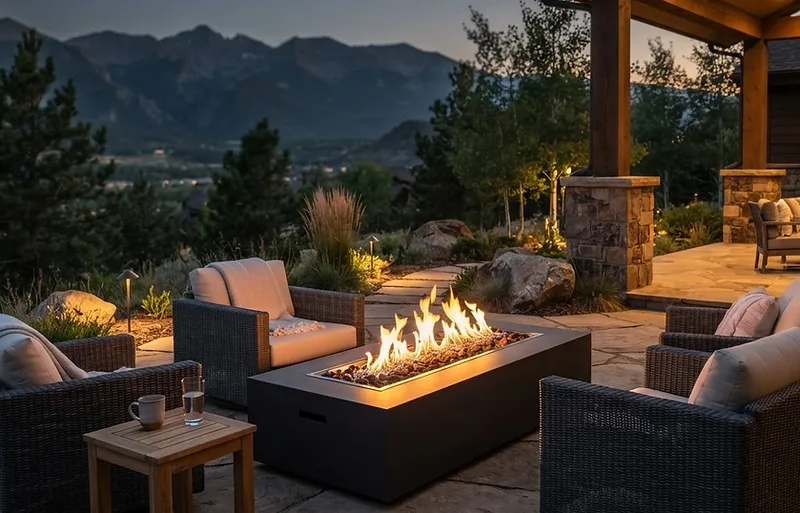
Fulcrest builds custom fire pits and outdoor fireplaces in Windsor, Timnath, Greeley, Berthoud, Severance, and surrounding Northern Colorado communities, including gas and wood-burning fire features.
Loading projects…
Start by ruling spots out, not in. The house, patio cover, fence, and landscaping all sit close enough to a fire feature to matter, and combustible material nearby can eliminate a spot before anything else gets considered. Gas appliances add their own layer, since listed clearance requirements vary by product. We work through those constraints first, then build the stone or concrete finish work around whatever spot actually survives them.
There are real restrictions on burning wood outdoors in Fort Collins, whether it's a portable pit or something built into the patio: a fuel area under roughly 3 feet wide and 2 feet tall, at least 15 feet from structures, and someone attending it the whole time it's burning, with water or an extinguisher within reach. Those fires can also be restricted by burn bans, red flag conditions, and high wind, so whether you can use one isn't entirely up to your calendar. Permanent, built-in fire features add another layer, since whether a wood-burning version is allowed can depend on how the structure is classified. We confirm that with the city before designing around a fuel choice that might not get approved. A permitted gas fire feature sidesteps some of that uncertainty, though it comes with its own installation and clearance requirements.
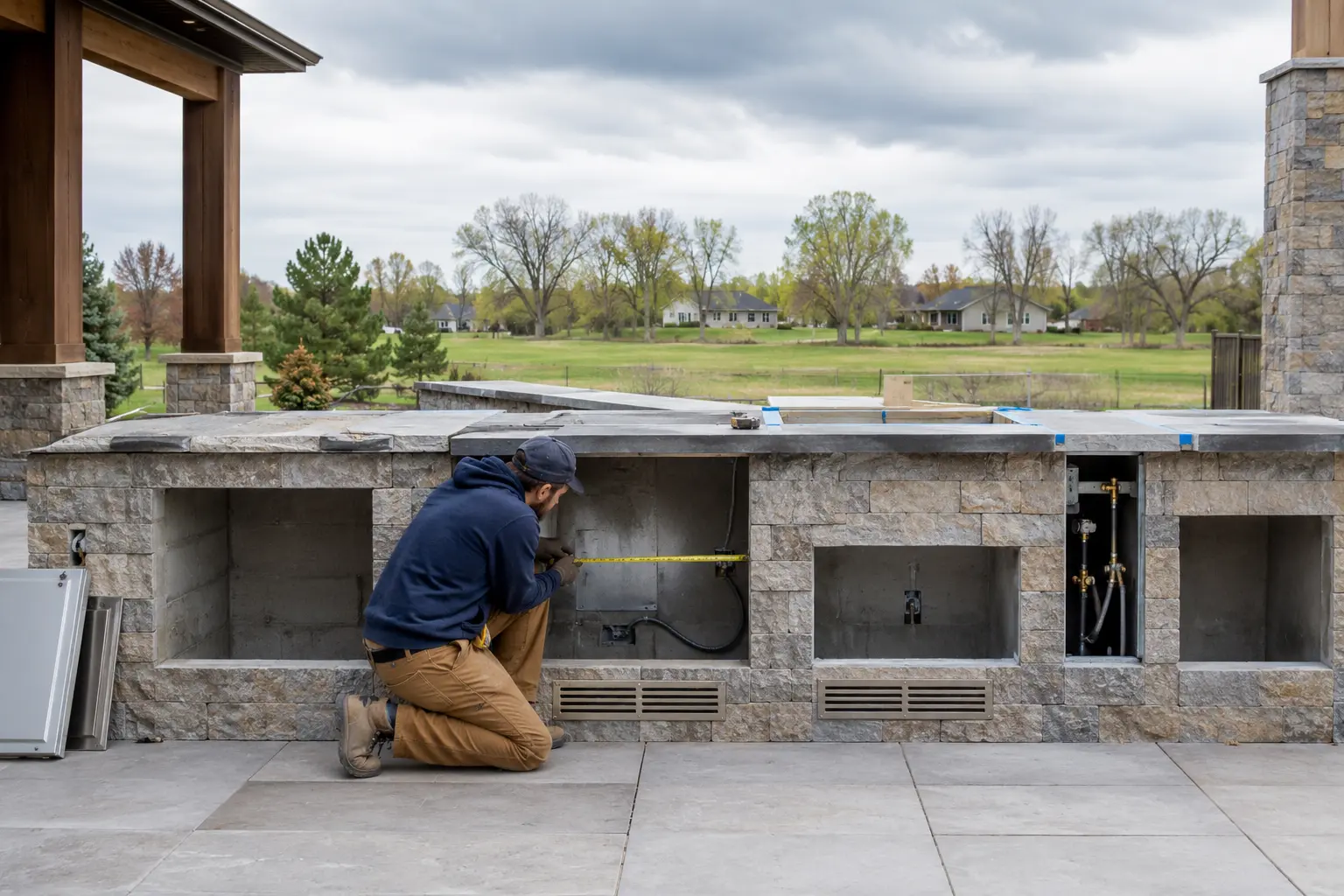
With a gas fire pit, the burner isn't something to drop into a finished stone box at the end. The listed appliance, gas supply, ventilation, shutoff, ignition, clearances, and future service access all need to work together. A gas fire feature has to be installed as an approved, listed appliance following the manufacturer's instructions, that's a standard requirement across Northern Colorado, not a one-off rule. Planning that first lets the finished surround look intentional without hiding something that needs ventilation or access later.
Comfort and safety depend on wind, clearances, overhead conditions, seating distance, fuel routing, local restrictions, and how the feature will be supervised.
Convenience, heat, smoke, fuel storage, burn restrictions, cleanup, and installation needs should guide the choice.
Avoid placing people in a smoke path or forcing primary traffic through the hot zone.
Combustible surfaces, overhead structures, enclosures, and appliance instructions affect clearances and construction details.
Explore our service areas for local project guidance, municipality considerations, and location-specific information for communities we serve.