What ‘Low Maintenance’ Actually Means
A low-maintenance deck cuts down on the recurring work. It doesn’t mean no care at all. In Northern Colorado, strong sun, windblown debris, snow, temperature swings, and drainage all put real demands on a deck, so ‘low maintenance’ has to hold up against actual weather, not just a sales sheet.
Most homeowners asking about low-maintenance decking really want out of the sanding-staining-sealing cycle. Capped composite and PVC boards do cut that surface work way down, but they still need cleaning. Leaves, pollen, grease, and snow don’t disappear just because a board has plastic in it, and every manufacturer has its own approved cleaners and tools.
The framing underneath matters just as much. A deck can look great on top and still have loose connections, trapped water, or a stair that’s starting to move. We treat low maintenance as a whole-system decision, not a board label.
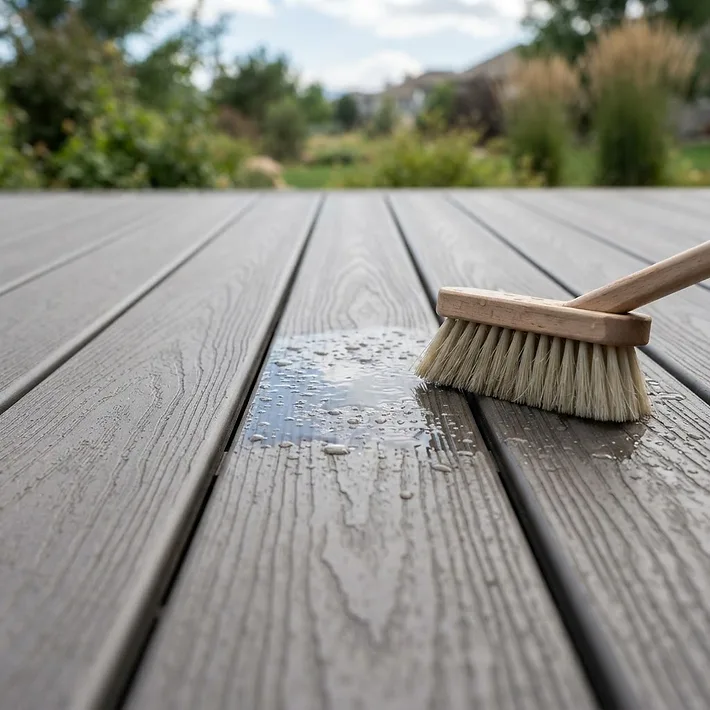
- Surface care: sweeping, washing, removing spills, and following the selected board manufacturer's instructions.
- System inspection: observing railings, stairs, fasteners, flashing, framing, footings, and drainage.
- Site management: keeping soil, vegetation, stored items, snow, and debris from creating avoidable problems around or below the deck.
Composite, PVC, Cedar, or Pressure-Treated Wood?
No single material wins every category. Someone who likes natural grain and doesn’t mind replacing an individual board will land somewhere different than someone who just wants to stop staining. Start with the property and how you’ll actually use it, not a color chip.
Capped composite pairs a composite core with a protective outer cap, which is why it skips the sanding-and-staining cycle wood needs. But product lines still differ in color, scratch resistance, fastening, span requirements, and warranty coverage. Trex, for instance, uses recycled plastic film and reclaimed sawdust in its current boards, but that’s specific to Trex, not composite decking in general.
Advanced PVC has no wood fiber at all, which helps with moisture and cuts down on surface work further. That doesn’t automatically make it the ‘greener’ or better choice. Recycled content, how hot it gets underfoot, and what happens to it at end of life still belong in the comparison.
Cedar and other exposed wood are still a perfectly good choice for the right homeowner. You get a natural surface, and a damaged board can usually be swapped without touching the rest of the deck. The tradeoff is upkeep: sun, moisture, and the finish you want to maintain all drive how much work that becomes.
And pressure-treated wood usually shows up in the framing even when the surface is composite, so picking a low-maintenance top doesn’t make the structure underneath maintenance-free.
Capped composite
- Generally avoids the sanding, staining, and sealing cycle used for exposed wood; verify the exact product.
- Remove debris and follow the manufacturer's product-specific care guide.
- Compare the exact color and board outdoors in meaningful sun.
- Replacement depends on matching the profile, color, fastening system, and availability.
- Documented recycled content, durability, warranty terms, service conditions, and end-of-life information.
- Homeowners prioritizing reduced finish work and a wood-like surface.
Advanced PVC
- Generally avoids wood-finishing cycles; confirm the product's written requirements.
- Use only the methods and products allowed by the manufacturer.
- Evaluate color, exposure, airflow, and the physical sample at the property.
- Expansion, fastening, and access to matching replacement boards require planning.
- Recycled-content documentation, manufacturing disclosures, durability, warranty, and a realistic recycling or disposal path.
- Projects prioritizing reduced surface work and moisture resistance.
Cedar or exposed wood
- Cleaning and finish renewal depend on exposure, the coating system, and the appearance the homeowner wants to preserve.
- Match preparation and cleaners to the wood, existing finish, and coating instructions.
- A natural surface with behavior that still varies by color, finish, and exposure.
- Individual boards can often be worked or replaced, but weathered color may not match immediately.
- Species, sourcing or forestry certification, treatment, finish system, transport, repairability, and replacement cycle.
- Homeowners who value natural wood and accept recurring care.
Pressure-treated wood
- Surface care varies by use, exposure, treatment, finish, and appearance expectations.
- Use methods compatible with the treatment and any applied finish.
- Evaluate the actual board, finish, sun exposure, checking, and barefoot use.
- Commonly used in framing and sometimes as the surface; damaged pieces must be evaluated in context.
- Species, treatment documentation, intended-use category, sourcing, durability, maintenance products, and disposal requirements.
- Projects where initial material position, structural use, or straightforward board replacement carries more weight than eliminating finish work.
Resurfacing an Existing Deck
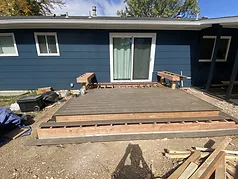
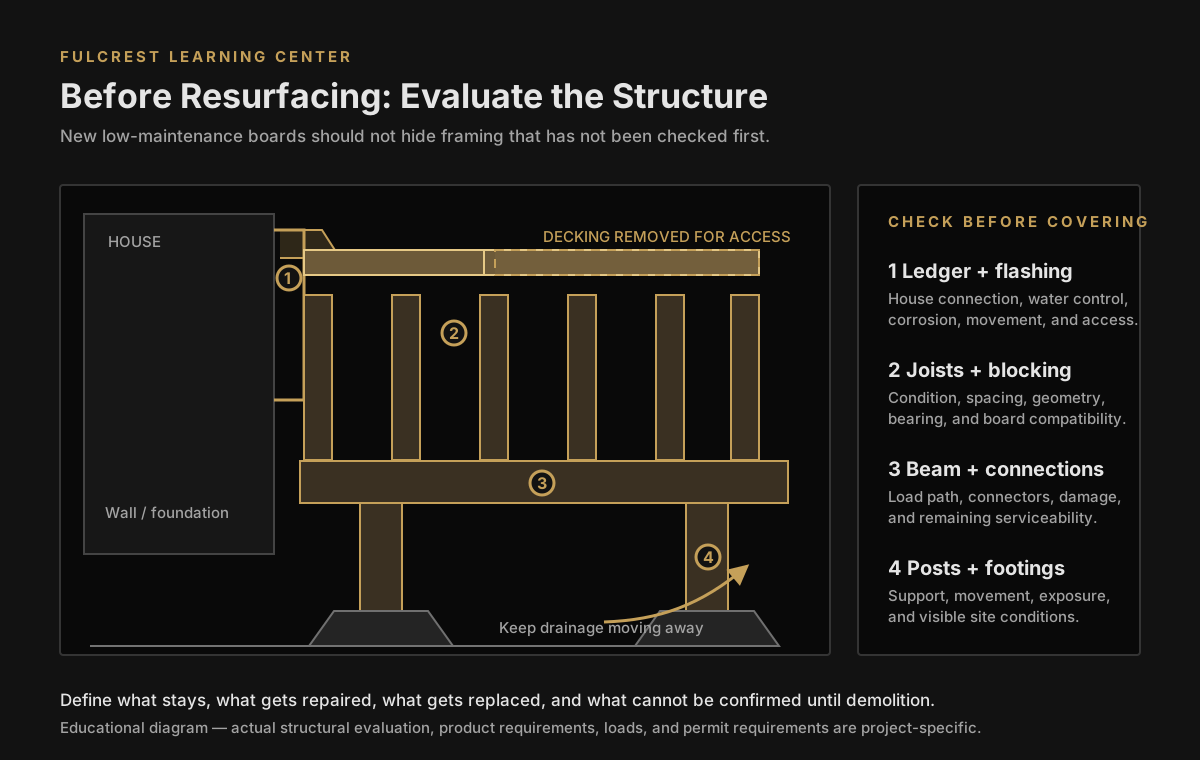
Resurfacing can make a lot of sense, but it’s not just swapping old boards for new ones. Before new decking goes down, the structure underneath needs a real look: the ledger connection to the house, the framing, the stairs, the footings. A worn surface doesn’t necessarily mean the framing is bad, but new boards shouldn’t be used to hide a problem with the connections, the stairs, or how water’s draining.
The new boards also have to fit the old framing. Joist spacing, span direction, and the manufacturer’s install requirements can all mean the existing structure needs some adjustment before it’ll accept a different product.
A good resurfacing plan spells out what stays, what gets fixed, what gets replaced, and what we won’t know for sure until the old decking comes off. That way you’re choosing between reuse and full replacement with real information, not guessing.
How We Put a Low-Maintenance Deck Together
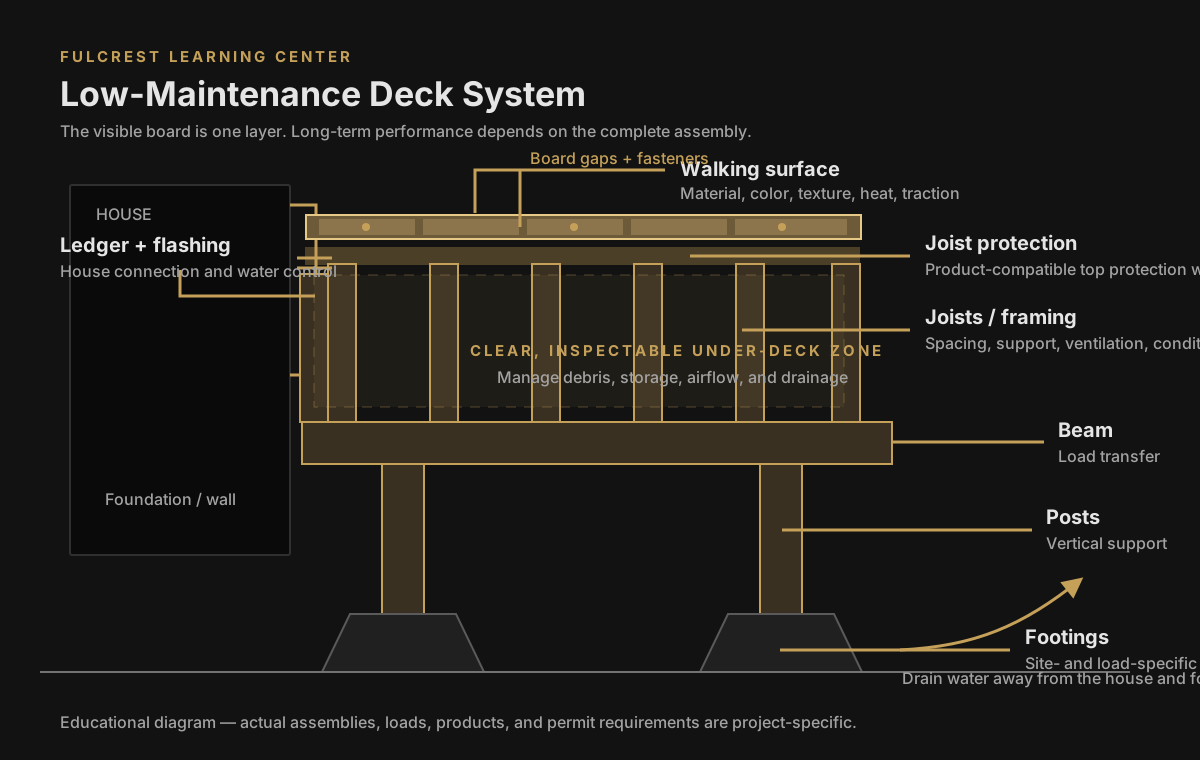
We plan the decking, the framing, drainage, railings, stairs, and how you’ll actually use the space as one system. Not a board pulled off a sample rack. Color, texture, board width, and how visible the fasteners are all factor in, along with furniture, pets, grills, and whether anyone’s walking around barefoot.
Always look at samples outside, ideally at your property in real sun. A sample under indoor lighting won’t show you the heat, glare, or how it reads against your house.
The framing has to carry real loads and, on an attached deck, connect properly to the house. Flashing, board spacing, and airflow underneath all affect where water and debris end up, and those hidden details are often what determines whether the deck stays easy to maintain or turns into a problem.
Railings, stairs, and traffic flow usually affect how much you enjoy the deck more than the board brand does. A low-maintenance surface won’t fix an awkward stair location or a railing blocking the view. That’s why we plan decks as part of the whole backyard, not as a standalone platform.
What Northern Colorado Weather Does to a Deck
A care guide written for the whole country doesn’t account for your property. Elevation, sun exposure, nearby vegetation, and your local municipality all matter here.
Deck surfaces heat up in direct sun, and color drives that more than the material or brand does. A dark board runs hotter than a light one no matter who makes it. Airflow plays a role too, so compare real samples outdoors before deciding. If afternoon sun is the real problem, a patio cover might solve it better than any board color will.
Follow your manufacturer’s snow-removal instructions. TimberTech, for example, publishes its own guidance rather than one generic method. Keep board gaps and the area where the deck meets the house clear, since Colorado wind pushes leaves and needles into spots rain won’t reach.
Composite isn’t automatically fire-resistant. Colorado State Forest Service wildfire guidance calls for keeping leaves and needles off the deck and combustibles out from underneath it. If wildfire exposure is a concern for your property, that’s worth a closer look at the specific product and the full assembly.
A Practical Maintenance Calendar
Low maintenance works best when the handful of remaining tasks are planned instead of forgotten. Exposure, use, and your specific product’s instructions will shift the exact schedule. Treat these as seasonal reminders, not a substitute for what the manufacturer tells you.
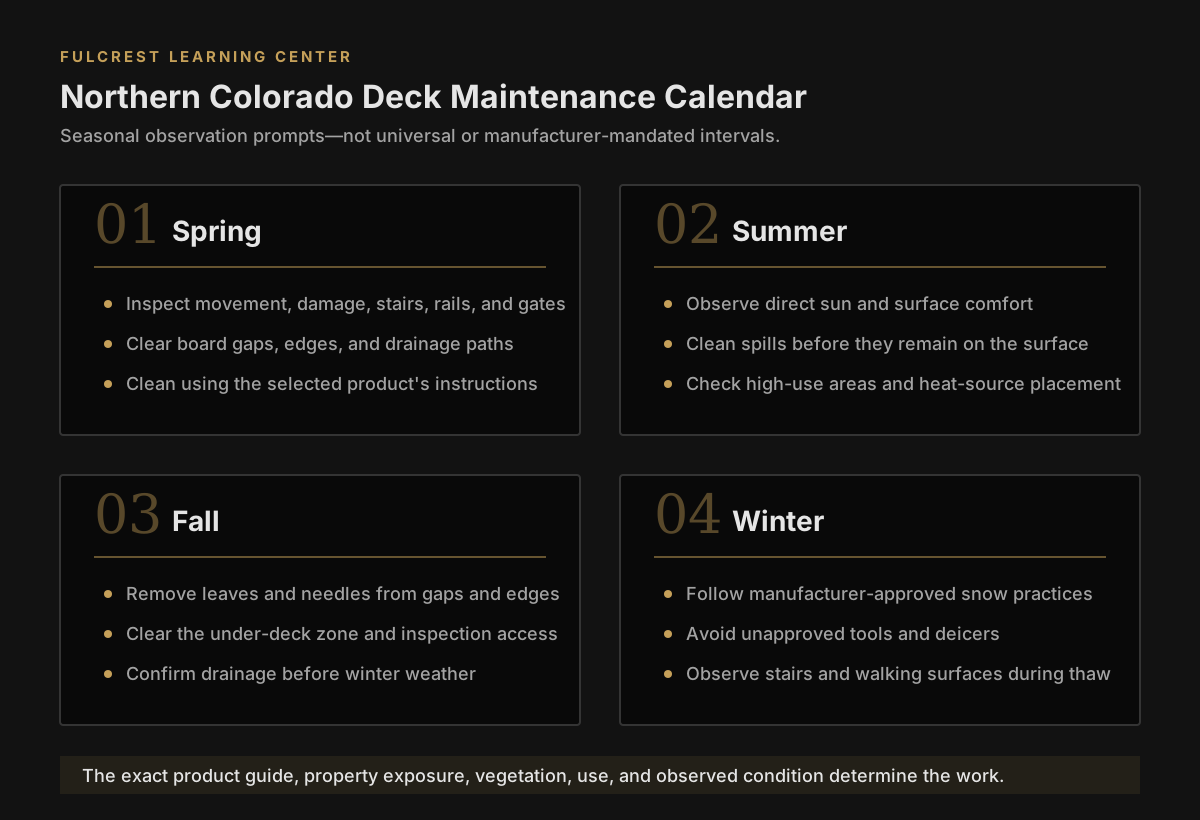
- Spring: look for movement or damage after winter; check stairs, rails, gates, visible connections, drainage paths, and the house connection; clean according to manufacturer instructions.
- Summer: observe the surface during strongest sun exposure; clean food, grease, and drink spills promptly; keep grills and heat sources positioned according to product and appliance requirements; watch high-traffic areas.
- Fall: remove leaves and needles before they pack into gaps; clear the area beneath the deck; confirm water can move away from the house and footings; address damaged components before winter.
- Winter: follow manufacturer snow-removal instructions; avoid unapproved tools or deicers; keep drainage and inspection access clear; recheck stairs and walking surfaces during freeze-thaw conditions.
“Recycled Plastic” Isn’t the Whole Story
A board that’s “made from 95% recycled plastic” sounds like the responsible choice, but that’s one fact about the product, not the whole picture. What actually determines its impact is the whole life of the material: how it’s made, how long it holds up on your deck, how much upkeep it needs, and what happens to it once it’s replaced. The EPA’s sustainability framework looks at exactly that full picture, which is why we ask manufacturers for real documentation instead of taking an “eco-friendly” label at face value.
A plain product that’s genuinely well-matched to your site and lasts 25 years can beat a “sustainable”-branded one that’s the wrong fit and needs replacing in ten. The greenest deck is the one that lasts.
Questions to Settle Before Choosing a Product
Start with whether this is new construction, a full replacement, or a possible resurface. If there’s existing framing, it needs a condition check first. From there, think through sun exposure, grills or heavy features, pets and mobility, snow and water paths, what collects underneath, and whether shade, lighting, or an outdoor kitchen might come later.
Permitting depends on your address and project scope. Fort Collins, Loveland, and Windsor each publish their own deck-permitting guidance, and requirements can change. We always verify against your actual municipality and project rather than relying on a general article.
- Is this a new structure, full replacement, or possible resurface?
- If framing exists, has its condition been evaluated?
- Which areas receive the most direct sun?
- Will the deck hold a grill, dining area, hot tub, planters, or heavy furniture?
- Are pets, children, bare feet, or mobility needs part of the design?
- How will snow and water leave the surface?
- What collects beneath the deck?
- Does the property have HOA, setback, permit, or wildfire requirements?
- Is future shade, lighting, or an outdoor kitchen likely?
- What maintenance work is the homeowner genuinely willing to perform?
Ready to Talk About Your Property?
By now you’ve seen how composite, PVC, cedar, and pressure-treated wood stack up, and the big takeaway is that low maintenance comes from the whole system working together, not just the board you pick.
The best next step is showing us your actual property. Send us the address, how you’re planning to use the space, and anything else on your mind, whether that’s future shade, an outdoor kitchen, or a bigger backyard plan down the road. We’ll walk through what fits, what it’ll take, and where to go from here.
Frequently Asked Questions
What is the lowest-maintenance deck material?
Capped composite and PVC generally reduce recurring sanding, staining, and sealing compared with exposed wood. The lowest-maintenance choice for a specific property still depends on cleaning requirements, heat, damage risk, framing condition, installation details, and the exact product documentation.
Does composite decking require maintenance?
Yes. Composite decking still needs debris removal and manufacturer-approved cleaning. The deck's stairs, railings, fasteners, flashing, framing, footings, and drainage also need periodic observation.
Is composite decking always more sustainable than wood?
No. Don’t assume it just because the label says ‘eco-friendly’ or ‘recycled.’ What actually matters is how long the product lasts on your property, how much upkeep it needs, and what happens to it when it’s replaced. A plain product that’s a good fit for your site can easily beat a ‘sustainable’ one that isn’t.
Does composite decking get hot in Colorado sun?
Yes, and color is the biggest reason why, more than which product or brand you choose. A dark board runs hotter than a light one regardless of manufacturer. Exposure and airflow play a smaller role, so compare physical samples outdoors and consider shade as part of the design.
Can composite decking be installed over an existing framing?
Sometimes, but the existing framing must first be evaluated for condition, geometry, spacing, load, connections, flashing, and remaining suitability. New boards should not be installed merely because the top of the old framing looks acceptable.
Do low-maintenance decks need permits?
Material choice does not remove permit requirements. Whether a permit is required depends on the municipality, attachment, height, area, structural work, property, and project scope.
What should be inspected after winter?
Check walking surfaces, stairs, railings, gates, visible fasteners, framing, connections, drainage routes, and areas where debris or moisture collected. Investigate movement, damage, or softness instead of covering it with a cosmetic repair.