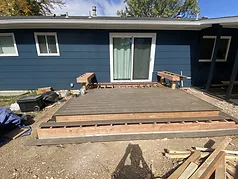
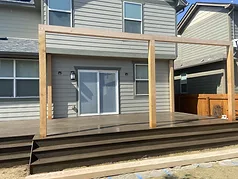
A Separate Decision Beneath the Surface
Composite versus cedar describes the walking surface. The joists, beams, blocking, posts, connections, and support system below it are a separate structural decision.
Pressure-Treated Wood Framing
Pressure-treated lumber is widely used for residential deck framing. It still requires correct member sizing, moisture-aware detailing, suitable treatment, compatible structural hardware, and project-specific connections.
Purpose-Designed Steel Framing
Manufactured steel deck-framing systems avoid biological wood-decay mechanisms but introduce product-specific requirements for corrosion protection, connections, fastening, cutting, and material compatibility. Some systems support configurations different from conventional wood, but allowable spans and details must come from the actual system documentation or engineering.
Where the Difference Matters Most
Framing-system selection can become especially important with significant elevation, unusual geometry, long spans, concentrated loads, low-clearance moisture conditions, or finish details demanding a particularly straight substrate.
Don't Forget What's Holding the Deck Up
Picking composite or cedar decking is one decision. What holds it up is another, and the two don't automatically match just because they're going in on the same project. If a framing system is labeled 'steel' or 'wood,' that alone doesn't tell you whether it's right for your deck: two products both called 'steel framing' can be rated for different spans, handle stairs and railings differently, and hold up to moisture in different ways.
The fastening, spacing, and gapping your decking needs also have to match the actual framing underneath it, not just be assumed to work. We check the surface and the framing together as one system before anything gets ordered, rather than assuming any decking can go over any framing.