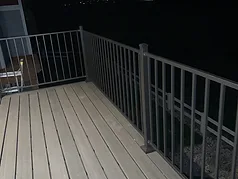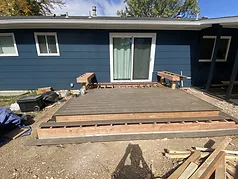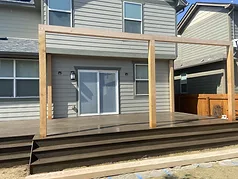
Start with the complete deck system
Soft boards, loose fasteners, peeling finish, and damaged railing are easy to see. The more important questions are often underneath: how the deck connects to the house, whether posts and footings are stable, whether framing can drain and dry, and whether stairs and guards move under load.
A responsible repair recommendation separates cosmetic deterioration from structural or system-level failure. Replacing boards before understanding the framing can spend money on the least important layer.
Start at the house connection
For an attached deck, the ledger and its connection to the building deserve close attention. Look for movement, staining, trapped debris, damaged siding, missing or questionable flashing, corroded hardware, and areas that are difficult to inspect.
A surface repair should not cover uncertainty at this connection. If conditions are concealed or questionable, the next step may involve opening a limited area or obtaining qualified structural guidance.
Follow the load path to the ground
- Joists: decay, splits, over-notching, holes, sagging, spacing, and bearing.
- Beams: condition, splices, bearing, connections, and visible deflection.
- Posts: plumb, decay, splits, fastening, and connection at top and bottom.
- Footings: settlement, rotation, exposure, cracking, and soil or drainage conditions.
- Stairs: stringer condition, support, attachment, tread consistency, and movement.
- Guards and rails: looseness, post attachment, corrosion, and damaged components.
When a targeted repair may be reasonable
Localized board damage, a limited number of repairable framing defects, isolated hardware problems, or a specific stair or guard issue may support a focused repair when the rest of the structure is sound and the repaired work will integrate correctly.
The question is whether the problem is isolated. If the same failure keeps showing up in different spots across the deck, that’s usually not a board problem — it’s a drainage, material, or structural issue a patch won’t fix.
When Replacement Is the Better Call
Widespread decay, repeated settlement, movement at major connections, or several systems wearing out at once can make patching a poor use of money.
Replacement may also be the clearer path when the existing layout is unsafe or no longer fits how the home uses the yard. That does not make every old deck a teardown; it means repair cost should be weighed against remaining service, risk, and the work still left untouched.
What resurfacing requires
Composite and other new surfaces may require specific joist spacing, flatness, ventilation, blocking, edge support, fastening, and stair details. Fascia and picture-frame layouts can add framing. Existing rails and stairs may not reconnect cleanly.
Before pricing a resurface, confirm what will remain, what will be corrected, and how hidden conditions will be handled if they appear after demolition.
Questions a repair proposal should answer
- What was inspected, and what remained concealed?
- Is the recommendation cosmetic, structural, or both?
- What caused the visible failure?
- Which components remain and what condition are they in?
- Will the new material be compatible with existing framing and spacing?
- How will hidden damage or scope changes be documented?
- What useful service should the repaired work reasonably provide, without relying on a generic lifespan promise?